
Plastic storage boxes line the corridors of Singapore’s public housing estates, stacked in service yards and tucked beneath beds, silent witnesses to the intricate choreography of making a life in limited space. I have spent time in these flats, observing how families negotiate the relentless accumulation of possessions against the unyielding constraints of square footage. What emerges is a portrait of modern urban existence, where these humble containers become tools of survival, markers of aspiration, and sometimes, reminders of what we cannot afford to let go.
The Geography of Constraint
In Singapore, space is not merely expensive; it is precious beyond measure. The average Housing Development Board flat offers perhaps 70 to 90 square metres for an entire family’s life. Bedrooms double as study areas. Living rooms transform into dining spaces by evening. Every corner must justify its existence through multiple functions. Into this compressed reality, storage boxes insert themselves as spatial negotiators, allowing vertical expansion where horizontal growth proves impossible.
I watched Mrs Tan, a mother of three in Tampines, stack translucent boxes along her bedroom wall. Inside: outgrown children’s clothing waiting for the youngest to grow into them, seasonal decorations used once yearly, important documents that must be kept but need not be accessed frequently. Each box represented a calculation, a decision about what deserved space in a home where space itself constituted a luxury.
The Singapore Department of Statistics notes that median dwelling size has decreased over recent decades even as household incomes have risen. Storage solutions become not optional accessories but essential infrastructure for daily life.
The Economics of Keeping
Plastic storage solutions occupy a curious position in household economics. They are affordable enough that most families can acquire them, yet their very presence signals deeper financial realities. The family that stores rather than discards often does so because replacement costs exceed storage costs. The boxes hold children’s shoes that younger siblings will inherit, bulk purchases made during sales, items too valuable to discard but not valuable enough to display.
Consider these common storage scenarios in Singapore households:
- Festive supplies for Chinese New Year, Hari Raya, or Deepavali stored 11 months annually
- School textbooks and materials from previous years kept “just in case”
- Clothing in multiple sizes as children grow or adults’ weights fluctuate
- Bulk purchases of non-perishables bought during promotional periods
- Sentimental items lacking daily utility but carrying emotional weight
Each scenario reflects economic calculations that middle and lower-income families make constantly. The National Environment Agency has observed that “proper storage extends the usable life of household items, reducing waste and household expenditure over time.” This is not merely environmental wisdom; it is financial necessity dressed in ecological language.
The Labour of Organisation
There exists invisible work in maintaining organised storage systems, labour that typically falls to women in Singapore households. I observed this pattern repeatedly: mothers sorting seasonal clothing, wives cataloguing kitchen supplies, daughters helping reorganise cramped bedrooms. The plastic box becomes an instrument in this largely uncompensated domestic labour, the physical manifestation of someone’s effort to impose order on household chaos.
The work is Sisyphean. Children grow, possessions accumulate, needs change. Every few months, the boxes must be pulled down, contents reassessed, decisions made about what stays and what goes. This is the hidden maintenance work of modern life, as essential as it is invisible to those who benefit from it.
Material Choices and Their Meanings
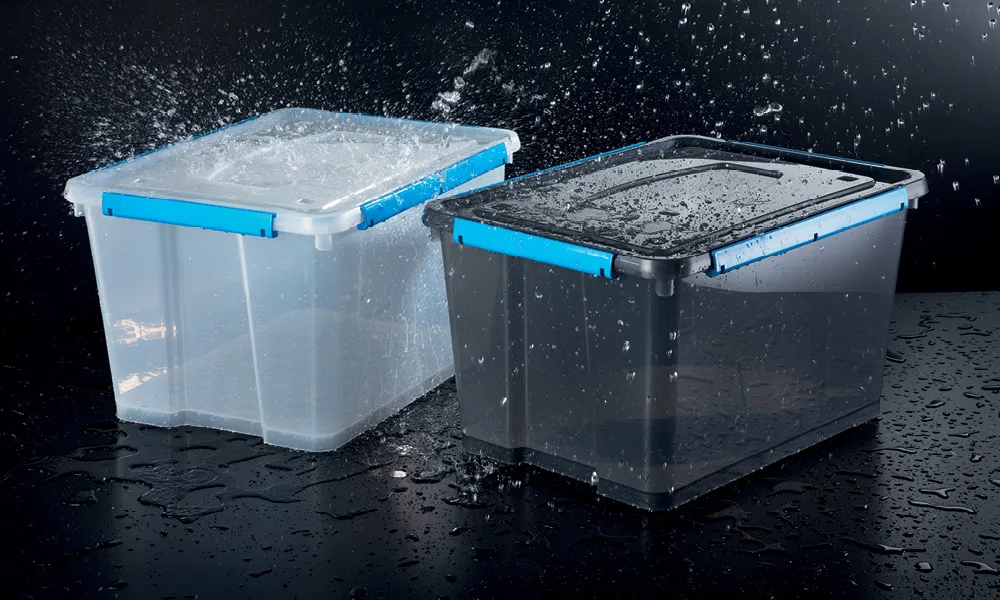
The type of storage boxes a household selects tells its own story. Clear plastic containers, more expensive than opaque alternatives, signal a household organised enough to benefit from visual inventory systems. Cheap, flimsy boxes that crack after months suggest budgets stretched thin. Modular, stackable systems indicate both financial capacity and spatial sophistication.
Quality matters profoundly in Singapore’s climate. The Building and Construction Authority notes that “high humidity levels in Singapore require storage solutions that resist mould growth and maintain structural integrity.” A poor-quality box warps, its lid fails to seal, and moisture infiltrates, destroying what it was meant to protect.
The Social Life of Storage
Walk through Singapore’s rental market and storage becomes a class marker. Expatriate families in condominiums have built-in wardrobes and storage rooms. Middle-class homeowners invest in custom carpentry. But in rental flats and older HDB estates, plastic storage boxes proliferate, stacked like transparent Jenga towers against walls.
These containers facilitate survival strategies particular to urban poverty. The domestic worker stores her belongings in boxes that can be quickly moved. The multigenerational household uses them to delineate personal space within shared rooms. The family preparing to move keeps possessions box-ready, aware that rental insecurity may require sudden relocation.
Dignity in Small Spaces
Yet there is also dignity in how families deploy these storage systems. The carefully labelled boxes suggest agency and control. The colour-coded systems reflect pride in household management. The neat stacks demonstrate that even in constrained circumstances, people create order and beauty where they can.
I think of Mr Kumar’s rental flat in Geylang, where storage boxes lined one wall from floor to ceiling, each labelled in careful English and Tamil. This was not chaos but architecture, a man building stability from plastic and determination in a housing market that offered him little security.
Conclusion
The proliferation of storage solutions in Singapore speaks to larger truths about urban life under late capitalism. We accumulate because consumption drives economies. We store because space costs more than things. We organise because order provides psychological comfort against material insecurity. Behind every stack of boxes lies a family’s negotiation with constraint, their efforts to build a dignified life within systems that often work against them. Understanding plastic storage boxes means understanding how ordinary people navigate extraordinary pressures, creating homes from limited space and hope from humble materials.