
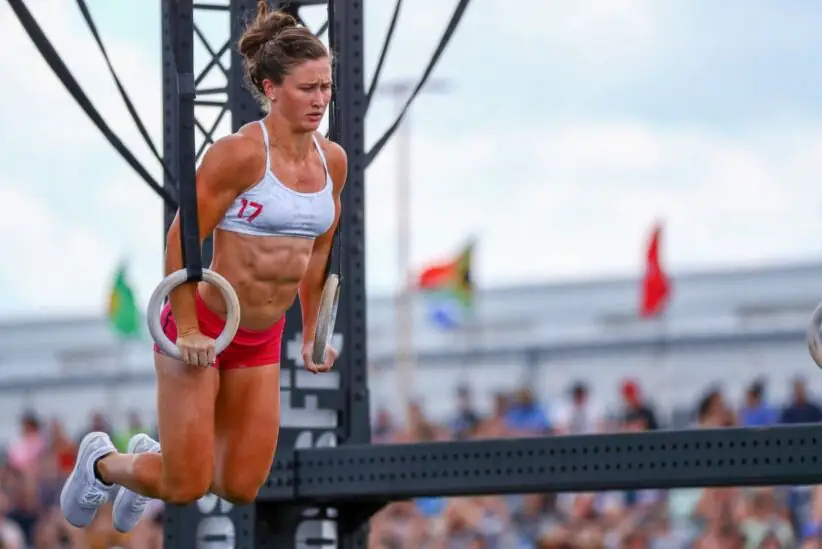

Gymnasts possess some of the most impressive physiques in athletics-broad shoulders, defined arms, visible abs, and functional strength that transfers to real-world movement. What’s remarkable is that they build these bodies primarily through bodyweight training rather than traditional weight lifting.
Developing a gymnast physique through calisthenics is absolutely achievable for dedicated individuals willing to master progressive bodyweight movements. This guide covers the principles and practices that create this distinctive athletic build.
What Defines the Gymnast Physique
The gymnast body has distinctive characteristics:
Upper Body Dominance: Gymnastics emphasizes pulling and pushing movements that develop the back, shoulders, chest, and arms significantly more than the lower body.
Low Body Fat: High strength-to-weight ratio demands mean gymnasts maintain low body fat, making muscle definition clearly visible.
Functional Muscle: Unlike purely aesthetic muscle, gymnast muscle is developed through movements requiring coordination, control, and strength simultaneously.
Balanced Development: All upper body muscles develop proportionally because movements require integrated function rather than isolated contraction.
Strong Core: Virtually every gymnastics movement demands core engagement, resulting in naturally developed abdominals without dedicated ab training.
Why Calisthenics Builds This Physique
Traditional weight lifting allows you to isolate muscles and progress by adding weight. Calisthenics requires different progression methods that produce different results:
Leverage Manipulation
Instead of adding weight, calisthenics progresses by changing body position to increase leverage disadvantage. This requires recruiting more muscle fibers and developing neuromuscular coordination simultaneously.
Time Under Tension
Many calisthenics movements involve holding positions (like the planche or front lever) that create constant tension without repetitive motion. This extended time under tension drives hypertrophy differently than traditional rep schemes.
Compound Movement Emphasis
Every calisthenics exercise is a compound movement requiring multiple muscle groups to work together. This integrated development creates the balanced, functional muscle characteristic of gymnasts.
Foundation Exercises
Before attempting advanced skills, master these fundamental movements:
Pull-Ups
The king of upper body development. Work toward 15-20 strict pull-ups before progressing to variations like archer pull-ups or one-arm progressions.
Dips
Essential for chest, shoulder, and tricep development. Progress from parallel bar dips to ring dips, which add stability demands.
Push-Ups
Foundational but often underestimated. Diamond push-ups, archer push-ups, and eventually one-arm push-up progressions provide years of development potential.
Rows
Horizontal pulling balances the vertical pulling of pull-ups. Progress from elevated rows to horizontal rows to front lever rows.
Core Work
L-sits, hollow body holds, and hanging leg raises build the core strength required for advanced movements.
Intermediate Progressions
Once foundations are solid, these movements accelerate development:
Ring Work
Gymnastic rings add instability that dramatically increases muscle activation. Ring push-ups, ring dips, and ring rows challenge muscles beyond their bar or ground equivalents.
Muscle-Ups
The transition from pull-up to dip in a single movement. Develops explosive pulling power and transition strength unique to calisthenics.
L-Sit Progressions
From tuck L-sit to full L-sit to V-sit. Builds tremendous hip flexor and tricep strength alongside core development.
Handstand Work
Wall-supported to freestanding handstands. Develops shoulder stability and strength while building full-body awareness.
Advanced Skills
These movements create the distinctive gymnast appearance but require years of progressive development:
Front Lever
Holding the body horizontal while hanging. Requires exceptional lat and core strength.
Back Lever
Similar position but facing upward. Develops shoulder flexibility alongside strength.
Planche
Holding the body horizontal on hands only. Perhaps the most challenging upper body strength movement in calisthenics.
Iron Cross (Rings)
Holding arms straight out to sides while on rings. The ultimate display of gymnastics strength.
Programming Principles
Frequency
Train each movement pattern 2-3 times per week. Skill work (handstands, levers) can be practiced more frequently at lower intensity.
Progressive Overload
Progress through easier variations before attempting harder ones. Never sacrifice form for progression-this leads to injury and incomplete development.
Deload Weeks
Every 4-6 weeks, reduce volume by 40-50% to allow recovery. Calisthenics is demanding on joints and connective tissue.
Skill vs. Strength Work
Separate skill practice (technique-focused, not to failure) from strength work (progressive overload, approaching failure). Both are necessary.
Nutrition for the Gymnast Physique
The lean, muscular gymnast body requires appropriate nutrition:
Protein
0.8-1.2g per pound of body weight supports muscle development and recovery.
Body Composition
Performance in calisthenics improves with lower body fat-less weight to move. Most gymnast physiques are achieved at 10-14% body fat for men, 16-20% for women.
Fueling Training
Adequate carbohydrates support the intense training required. Don’t cut calories so aggressively that training quality suffers.
Timeline Expectations
Building a gymnast physique takes years, not months:
Year 1: Foundation building. Master pull-ups, dips, push-ups, rows. Develop initial muscle and movement quality.
Year 2: Intermediate progressions. Muscle-ups, ring work, L-sits. Significant visible physique changes.
Years 3+: Advanced skill development. Front lever, back lever, planche progressions. Continued refinement of the gymnast aesthetic.
This timeline assumes consistent training and appropriate nutrition. Rushing produces injury, not faster results.
Conclusion
The gymnast physique-broad shoulders, defined arms, visible abs, functional strength-is built through progressive calisthenics training. Bodyweight movements create this distinctive build because they require integrated muscle function rather than isolated development.
Start with foundations (pull-ups, dips, push-ups, rows), progress to intermediate skills (rings, muscle-ups, L-sits), and eventually develop advanced holds (levers, planche). Support your training with adequate protein and appropriate body composition.
The journey takes years, but the result is a physique that demonstrates real strength and movement capability-not just aesthetic muscle.


